
Davie Garage Door Guide
Why Your Garage Door Jumps the Track
Davie homes from the 1960s-70s era have track hardware that ages differently in mild, humid conditions. Here's why doors jump track and what actually fixes it.
- Licensed & Insured
- Same-Area Service Calls
- Upfront Pricing
Checking It Yourself
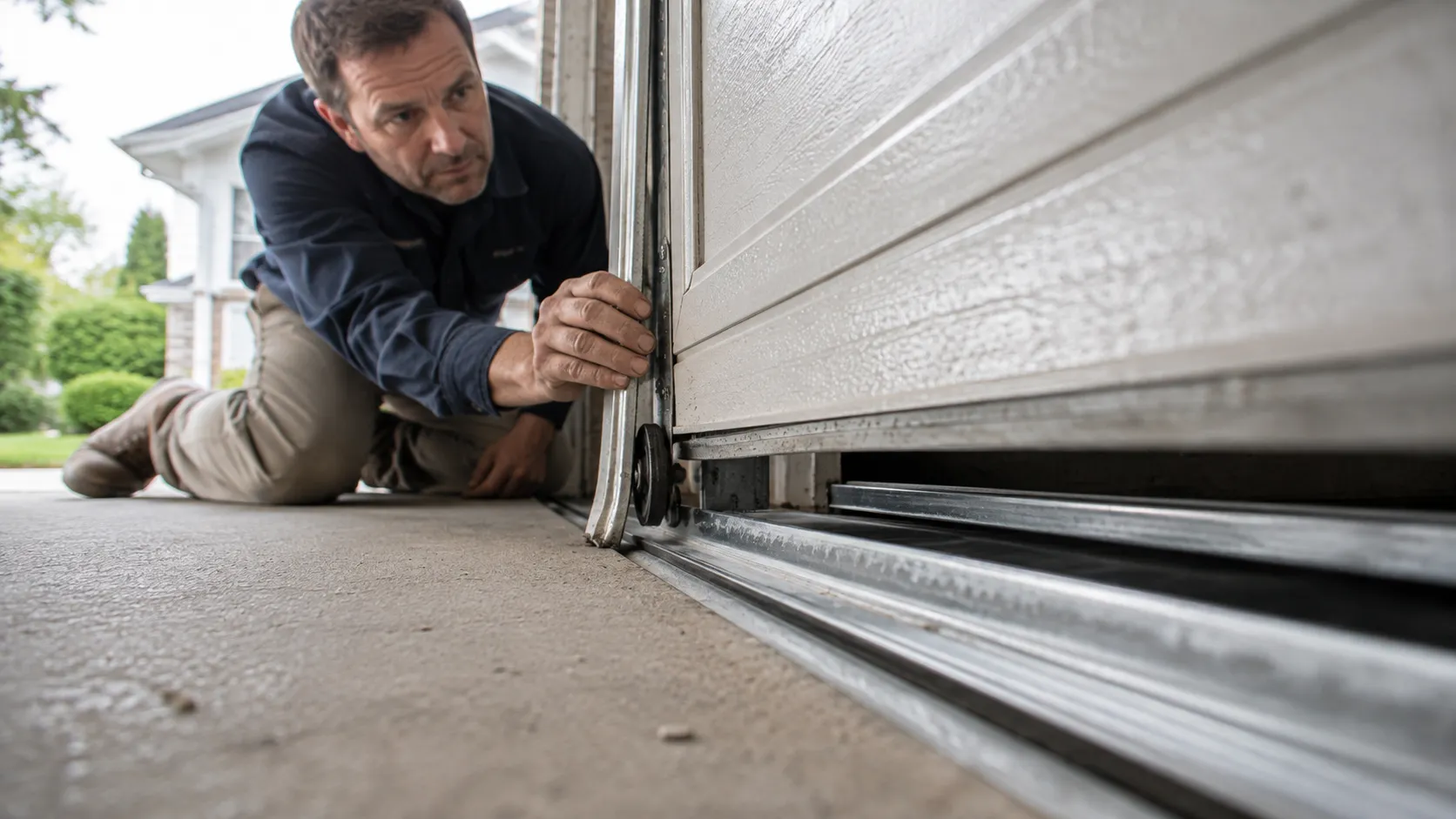
Before you call anyone, look at the track itself. Stand inside the garage with the door down and run your eyes along both vertical rails from the floor up to where they curve into the horizontal section near the ceiling. You're looking for a gap between the roller and the track, a bent rail, or a spot where the track has pulled away from the bracket that holds it to the framing.
Try the door by hand with the opener disconnected - pull the release cord first. A door that binds, drags to one side, or won't move past a certain point usually has a track problem, not a spring problem, though the two often show up together. Check the screws holding the vertical track to the wall studs; on houses built through the 1970s and into the 2000s here in Davie, that hardware has had decades to work loose, especially on the side that takes the most daily use.
If a roller has jumped clean out of the track, don't force the door up or down - you can bend the rail further and turn a $150 fix into a full track replacement. That's the one limitation worth saying plainly: once a rail is bent, straightening it rarely holds, and replacing the section is usually the better call.
What Local Conditions Do
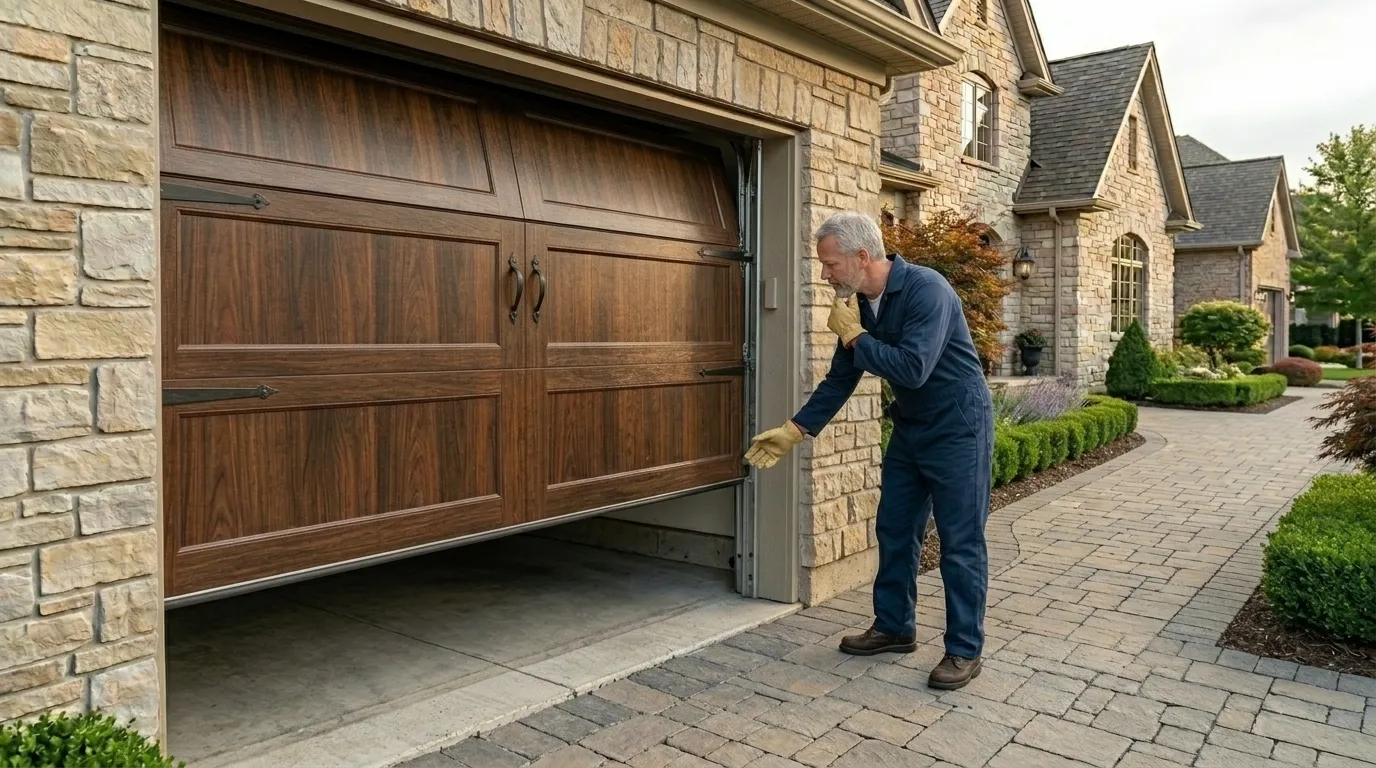
Davie sits in a mild temperate band with no hard freeze-thaw cycle, which is a break most of the country doesn't get - steel track here doesn't crack from ice the way it does up north. But mild and humid isn't the same as gentle. Consistent moisture in the air works on unpainted or scratched steel brackets and roller stems over years, and the corrosion doesn't announce itself with a loud noise - it just lets fasteners back out a little at a time until a bracket that used to hold tight starts to flex under the door's weight.
Combine that slow loosening with houses built anywhere from 1953 to 2005, median around 1975, and you get a wide spread of hardware gauges and mounting styles across the 40-plus named areas in this service territory. A 1970s-built house often has a lighter door and lighter track than a house built in the 1990s or 2000s, so the same amount of wear shows up faster on the older stock. That's the pattern we see: older sections here go off track sooner, not because the door is used harder, but because the original hardware was sized for a lighter door in the first place.
What It Costs
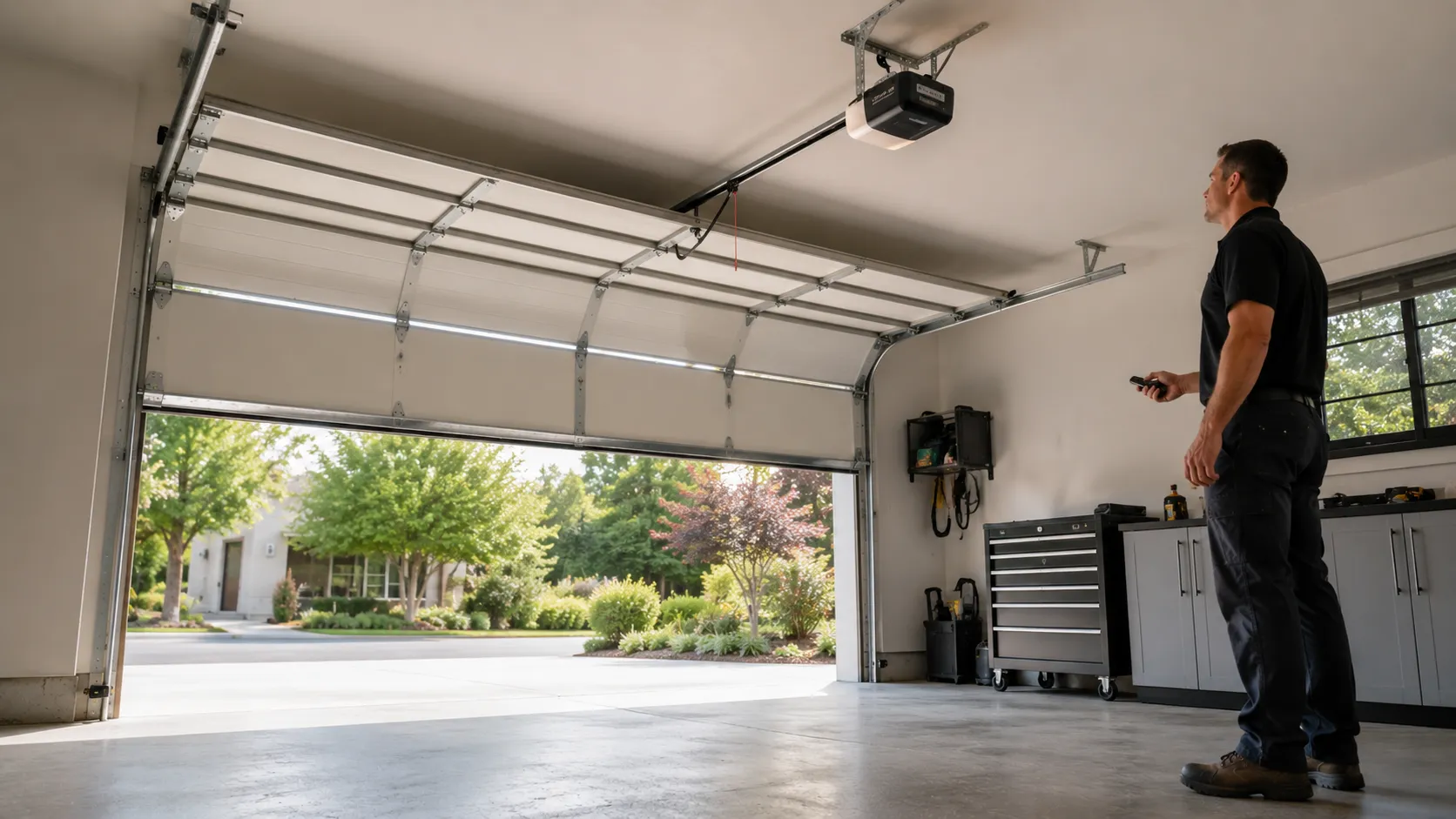
We can't quote a number without seeing the door, and we won't pretend otherwise. What we can tell you is what drives the cost up or down. A door that's simply off the roller on one side, with the track and bracket still straight, is usually the cheapest fix - realigning it and tightening the mounting hardware.
A bent rail costs more because the section has to come off and get replaced, not hammered back into shape. If the bracket has pulled loose from the framing because the wood behind it has degraded, that's carpentry as much as garage door work, and it adds a step. Homes in this area run a wide range of incomes and household sizes, and we price the job the same way regardless - by what's actually wrong with the door in front of us, not by guesswork over the phone.
If a rail is bent in more than one place, or the door is old enough that matching a discontinued track profile means a special order, we'll tell you before we start, not after.
The Problem
Most off-track doors trace back to one of three things: a roller that's worn down and no longer rides the rail cleanly, a bracket that's loosened over time, or a impact - a car bumper, a bike, a gust catching a door mid-cycle. In Davie's mild climate, the wear pattern leans toward the first two rather than sudden failure from a freeze or a hard cold snap, since that stress simply doesn't exist here the way it does farther north. What we see more often is the slow kind of failure: a roller stem worn oval instead of round, a track bracket backed halfway out of the stud, both easy to miss until the day the door finally jumps the rail.
On houses built in the 1960s and '70s, which make up a large share of this stock, the original track gauge was often lighter than what's standard on newer builds, so those doors are more likely to need a track upgrade rather than a like-for-like swap when the day comes. Left alone, an off-track door doesn't fix itself - it usually gets worse the next time it's opened, when the section can drop and bind the opener or crack a panel.
How We Can Help
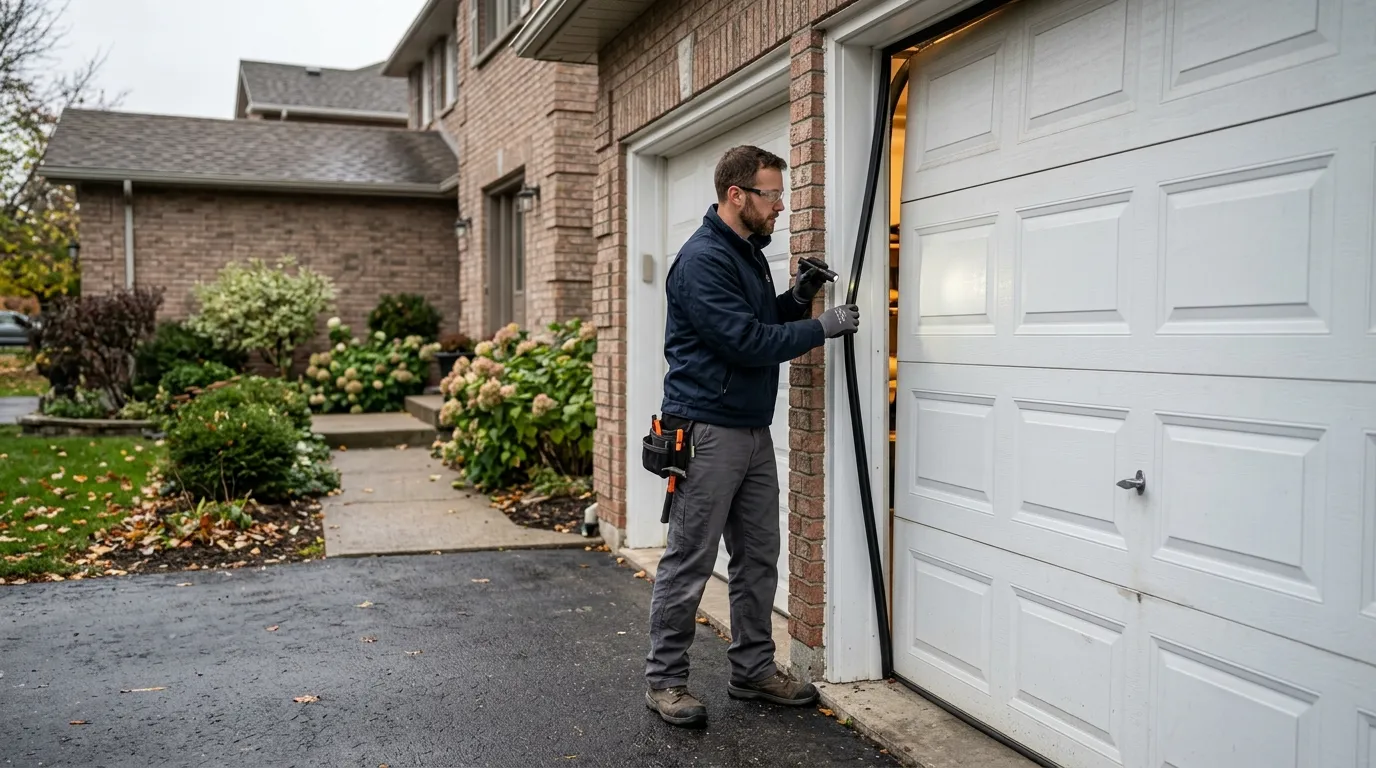
Garage Door Repair
Springs, cables, tracks, rollers, and openers fixed by a tech who explains the problem before touching anything.
Learn more →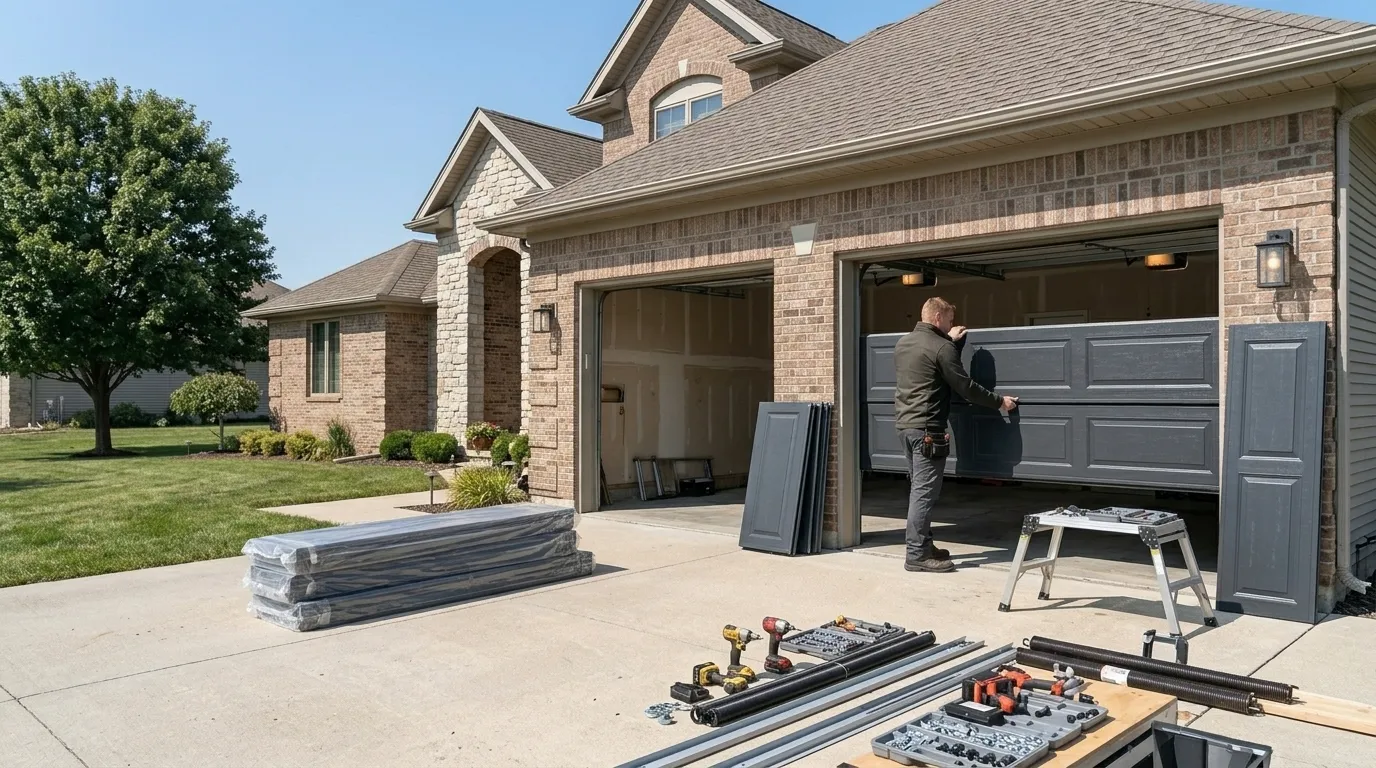
Garage Door Installation
New sectional doors sized and installed for the housing stock actually built in this area.
Learn more →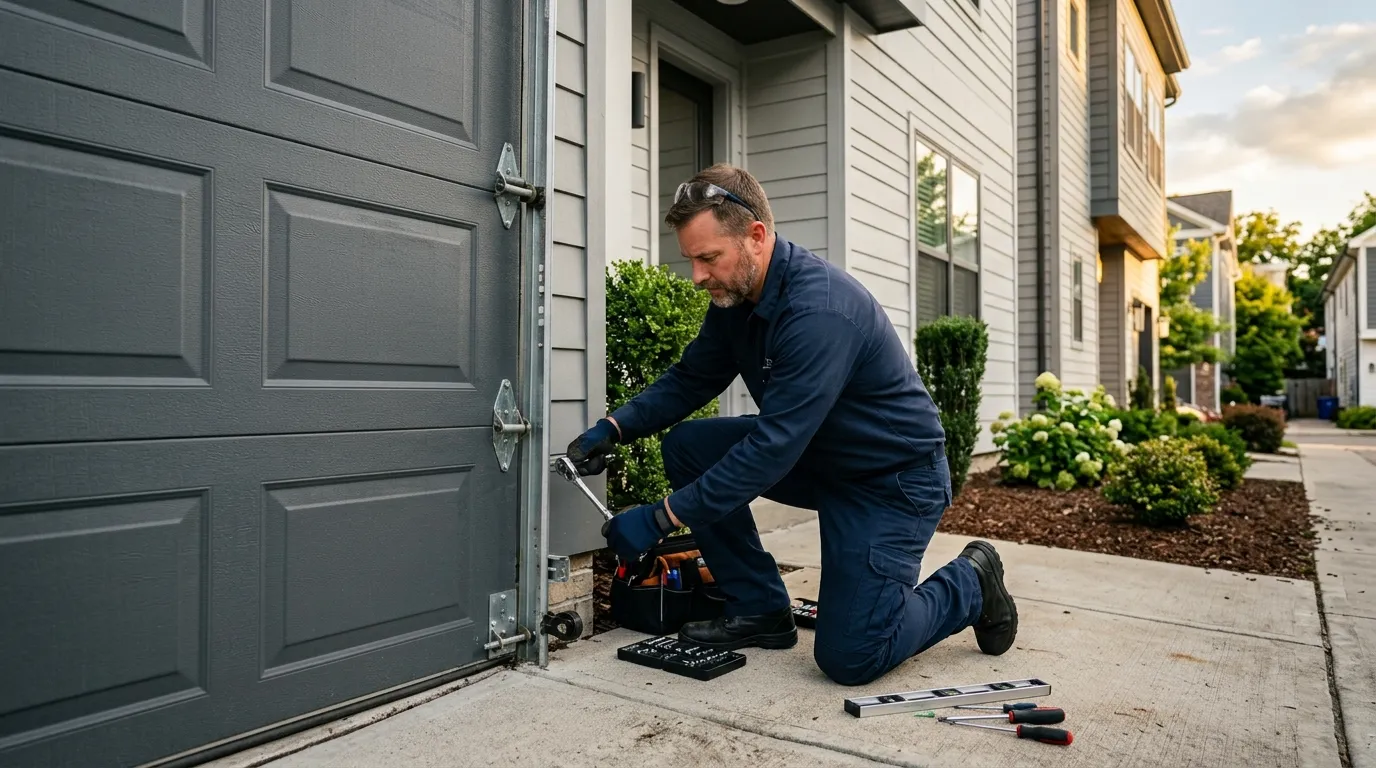
Garage Door Service
Tune-ups, lubrication, and safety checks that catch a small problem before it becomes a service call.
Learn more →Frequently Asked Questions
Can I put the door back on the track myself?
If it's just off the roller with no bent rail, sometimes yes, with the opener disconnected and the door supported. But garage doors are heavy and under spring tension, and a door that drops while you're working on it can cause real injury. If you're not sure the track is straight, it's safer to have it looked at first.
Does Davie's climate cause this more than elsewhere?
Not through freezing, since this area doesn't get that. What it does cause is slow corrosion on unprotected steel hardware from consistent humidity, which loosens brackets and pits roller stems over years rather than all at once.
Is it worse to keep using a door that's off track?
Yes. Running an opener against a door that's binding on a bent or loose track puts extra strain on the motor and can crack a panel or bend the rail further. Once it's off track, stop using the opener until it's checked.
Will the track match my door if it's from the 1970s?
Sometimes the exact profile is discontinued, especially on original hardware from that era. When that happens, we're upfront about it - the fix is usually a compatible replacement track section rather than an exact match.
Have a Door That Needs a Second Opinion?
Call and describe what it is doing - we will tell you what it likely is.